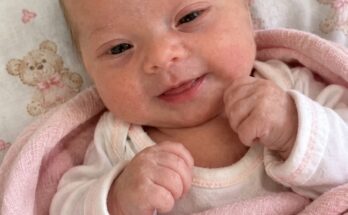
After we learned Nora had Down syndrome, my husband brought adoption papers. I was still learning how to feed her when he suggested telling my mother she’d died at birth. I set down Nora’s bottle and told him I’d sign if he did one thing for our daughter first.
Grant straightened Nora’s blanket before taking her photograph.
“There we go,” he murmured, smoothing a folded corner.
Our daughter immediately pulled one knee toward her stomach.
The blanket wrinkled again.
My husband brought adoption papers.
I laughed, too tired to manage much else.
“She hasn’t read your instructions.”
He took another picture, then inspected his screen.
I’d been holding Nora for barely an hour.
She’d arrived that Thursday morning.
He took another picture.
Her mouth opened against my hospital gown.
“Would you like another turn?” I asked him.
Grant glanced toward the door.
“Let me call everyone first.”
He’d already held her, carefully supporting her tiny head.
“Would you like another turn?”
I’d watched his face instead of hers.
For once, he hadn’t seemed concerned about being watched.
Now he stood beside the window, announcing her arrival.
I touched the damp hair above Nora’s ear.
There were people waiting to hear about her.
I’d watched his face.
I wanted another minute before sharing her with them.
On the bedside table, my phone kept lighting up.
My sister wanted a photograph.
My mother wanted to know whose nose she’d inherited.
Grant wanted me sitting straighter for the next picture.
My sister wanted a photograph.
“I’m a little occupied,” I reminded him.
Nora had found my finger and wouldn’t release it.
He lowered his phone.
A few hours later, the pediatrician pulled up a chair.
She congratulated us, then asked about Nora’s feeding.
“I’m a little occupied.”
I described the attempts we’d made with our nurse.
Grant remained standing, one hand around his phone.
The doctor explained what she’d noticed during Nora’s examination.
Some physical features suggested Down syndrome.
She recommended blood testing to examine Nora’s chromosomes.
The doctor explained what she’d noticed.
I looked at the baby resting against my chest.
“Is she uncomfortable?” I asked.
The doctor explained that the condition itself wasn’t painful.
They would assess Nora’s health and help with feeding.
I needed her to repeat some of that.
The condition itself wasn’t painful.
My mind kept catching on unfamiliar words.
Grant stepped closer before I could finish another question.
“But you’re not certain?”
The doctor turned her chair toward him.
“The testing will give us clearer answers.”
My mind kept catching on unfamiliar words.
He nodded, then asked when we’d know.
I thought we were frightened about the same things.
***
That evening, he asked me to stop sending pictures.
I was choosing one for my sister.
Nora’s cheek rested against my thumb in it.
He asked me to stop sending pictures.
“Why?” I asked, keeping the phone in my lap.
Grant twisted the lid onto his untouched coffee.
“Until we know what’s happening.”
I’d already told my sister about the testing.
His fingers stopped on the lid.
“Until we know what’s happening.”
“You could have waited, Liv.”
I watched him wipe a coffee drop from his cuff.
Once, a stain that small had delayed an entire dinner.
We’d been heading to one of his company events.
I’d bought a green dress especially for it.
“You could have waited, Liv.”
He’d looked me over, then checked his watch.
“You look huge in that.”
I was four months pregnant.
I’d explained that, trying to make it a joke.
Grant had opened my closet and found something black.
“You look huge in that.”
I wore it because I wanted an easier evening.
Later, he complimented me in front of his colleagues.
I’d let that count as kindness.
At his company, Grant managed an entire division.
At home, even my dress became his decision.
I’d let that count as kindness.
Now I sent my sister Nora’s photograph.
Grant watched the message leave without answering my question.
***
The following day, our nurse helped with another feeding.
She adjusted my pillows and showed me another position.
Nora took her time.
Grant watched the message leave.
I learned to stop watching the clock.
Grant kept leaving to handle calls in the hallway.
Whenever the pediatrician appeared, he repeated his questions.
Could the features mean something else?
How reliable would the results be?
I learned to stop watching the clock.
I wanted certainty too.
But he never asked about the feeding.
That afternoon, my sister brought clean pajamas and sandwiches.
She sat beside me while Grant answered another call.
“What do you need?” she asked, opening a wrapper.
He never asked about the feeding.
I couldn’t decide between sleep and washing my hair.
She helped me eat first.
Before leaving, she placed a small rabbit beside my bag.
My mother had bought it for Nora’s nursery.
Grant had moved it before photographing the finished room.
She placed a small rabbit beside my bag.
The rabbit didn’t match his carefully chosen colors.
I’d put it back after he left for work.
That was when I’d noticed an envelope beside the dresser.
He’d written Nora’s name across it.
Underneath, he’d added a date 18 years away.
I’d put it back after he left for work.
“A letter for her birthday,” he’d explained that evening.
He wouldn’t let me read it.
I’d kissed him, delighted by something so unexpectedly private.
In the hospital, I tucked the rabbit into my bag.
***
The next morning, the pediatrician returned with test results.
He wouldn’t let me read it.
The rapid chromosome test confirmed what she’d suspected.
A fuller chromosome report would follow.
Nora had Down syndrome.
I held her while the doctor explained the next steps.
She discussed health checks, follow-up visits, and available support.
Nora had Down syndrome.
I asked her to write down what mattered first.
I couldn’t remember everything while watching Nora’s sleepy face.
Grant stood beside the window, silent now.
Before leaving, the doctor invited more questions.
He shook his head.
I asked her to write down what mattered first.
I waited until the door closed before looking at him.
“Could you bring me that folder?”
He didn’t move toward the information she’d left.
Instead, he approached my bed with a small, careful smile.
“Maybe we shouldn’t take her home.”
“Could you bring me that folder?”
I thought he meant Nora needed further hospital care.
“Did the doctor say something outside?”
Grant pulled the visitor’s chair closer.
“We could arrange an adoption.”
My hand paused beneath Nora’s head.
I thought he meant Nora needed further hospital care.
He waited, apparently expecting me to consider it.
“There are families who would adopt a child like her.”
I adjusted my arm before speaking.
“Her name is Nora.”
He glanced at the bassinet.
He waited.
“I know her name, Liv.”
The impatience sounded familiar.
I hadn’t heard it directed at our daughter before.
“Then why are you discussing her like a mistake?”
He loosened his tie.
“I know her name, Liv.”
“Think about my career.”
I kept waiting for the rest of that sentence.
He seemed to believe he’d already explained enough.
“People will stare,” he continued, looking toward the door.
“So?”
“Think about my career.”
“They’ll whisper about us everywhere we go, Liv.”
Nora moved her mouth against my sleeve.
I lifted her slightly, settling her more comfortably.
“She’s hungry again.”
Grant made a small, frustrated gesture.
“They’ll whisper about us everywhere we go.”
“You aren’t considering the bigger picture.”
I reached for the call button beside my bed.
“Please leave.”
He stood, smoothing his tie back into place.
“We’ll talk when you’ve rested.”
“You aren’t considering the bigger picture.”
Afterward, I let the nurse help me feed Nora.
I couldn’t explain why I was crying yet.
Part of me still expected Grant to come back ashamed.
Maybe he’d return with questions instead of excuses.
I rehearsed what I’d say if he apologized.
I was crying.
***
The next morning, he arrived with his attorney.
I recognized Mr. White from a company dinner.
He carried a leather folder instead of flowers.
Grant moved my water glass to make room.
“We’ve discussed the options,” he began.
He arrived with his attorney.
Mr. White pulled his chair slightly away from Grant’s.
“I represent your husband,” he clarified before opening anything.
He explained that these were preliminary documents for discussion.
They couldn’t arrange an adoption through bedside signatures alone.
Grant was already sliding the papers toward me.
“I represent your husband.”
“He can handle everything quickly.”
The attorney put one hand on his folder.
“There would be a separate process and independent advice.”
I barely heard him over Nora’s small feeding noises.
Grant leaned closer, lowering his voice.
“He can handle everything quickly.”
“We can just have another baby.”
I set the bottle down before I dropped it.
He reached for a pen.
There was no misunderstanding left to clear up.
I remembered the envelope waiting beside Nora’s dresser.
“We can just have another baby.”
He’d smiled when he told me about it.
I looked at the paper between us.
“Fine,” I answered, keeping one hand against Nora’s back.
Grant stopped uncapping the pen.
“You agree?”
He’d smiled when he told me about it.
I watched his shoulders relax.
“On one condition.”
He sat forward, ready to negotiate something manageable.
I asked a different question first.
“What would we tell our family?”
“On one condition.”
Grant smiled as though I’d finally become sensible.
“There were complications during delivery.”
His attorney looked up.
I waited until Grant continued.
“We’ll say the baby didn’t survive.”
“There were complications during delivery.”
Nora sneezed against my gown.
I wiped her nose with the corner of her cloth.
“You’d tell my mother that?”
He spread his hands.
“People will feel sorry for us, then move on.”
“You’d tell my mother that?”
Mr. White closed the folder.
“I won’t help misrepresent what happened to this child.”
Grant turned toward him, irritation replacing the smile.
I spoke before he could answer.
“May I have a blank sheet?”
Mr. White closed the folder.
The attorney hesitated, then took one from his folder.
I laid it in front of Grant.
His pen was still uncapped.
“Write Nora a letter.”
He glanced between me and the empty page.
I laid it in front of Grant.
I kept my voice level.
“Explain why you don’t want to be her father.”
He started to answer, then looked at Mr. White.
Color spread from his collar toward his cheeks.
“She’s a baby, Liv.”
“Explain why you don’t want to be her father.”
I shifted Nora’s weight against my arm.
“She won’t always be.”
Grant lowered the pen until its tip touched the page.
Nothing followed.
I watched him try another angle, as though arranging words.
“She won’t always be.”
He’d explained himself readily enough when she couldn’t understand.
Now he couldn’t begin.
Eventually, he placed the pen beside the paper.
I pushed the adoption documents back toward his attorney.
“I’m not signing anything.”
Now he couldn’t begin.
Grant stared at me.
“You said you agreed.”
“I wanted you to hear what you were saying.”
I looked at the page he’d left untouched.
“I was never going to sign.”
“You said you agreed.”
His fingers closed around the pen again.
I waited until he looked at me.
“Nora is coming home with me.”
Then I asked both men to leave.
***
My sister answered before her phone rang twice.
“Nora is coming home with me.”
I told her everything, including the lie Grant had suggested.
She didn’t ask whether I’d misunderstood him.
“My spare room is ready,” she answered.
A hospital social worker helped me find support resources.
I arranged to speak with an attorney of my own.
“My spare room is ready.”
A nurse asked which visitors I wanted admitted.
This time, I answered without considering Grant’s feelings first.
That afternoon, he asked whether he could come upstairs.
I allowed a short visit.
He arrived carrying the envelope from Nora’s nursery.
I allowed a short visit.
“I went home,” he explained, laying it beside my bag.
I recognized the birthday written beneath her name.
“Please read it.”
I opened it while he stood near the doorway.
There were promises about birthdays, school, and scraped knees.
I recognized the birthday written beneath her name.
Then I reached a sentence I’d needed yesterday.
“Whatever happens, I’ll always be in your corner.”
I kept my finger beneath it.
“What changed?” I asked.
Grant looked toward the bassinet.
I reached a sentence I’d needed yesterday.
“Nothing about her.”
He pulled out the chair, then left it empty.
“I wanted you to make it easier for me, Liv.”
I folded the letter along its original crease.
“You wanted me to tell everyone our daughter died.”
“Nothing about her.”
He lowered his eyes.
I let him remain uncomfortable.
When he apologized, I listened without helping him finish.
Before leaving, he asked to hold Nora.
I watched him wash his hands at the sink.
I let him remain uncomfortable.
A nurse helped him settle into the chair.
He waited while I placed Nora in his arms.
Her blanket slipped as she moved against him.
This time, he left it crooked.
When he asked about feeding, I called the nurse over.
He waited while I placed Nora in his arms.
I needed him to listen to someone besides me.
She explained what we’d been practicing together.
Grant asked her to show him.
I watched without calling it a fresh start.
That morning, he’d brought someone to arrange Nora’s absence.
Grant asked her to show him.
I couldn’t forget that because he finally held her.
Before leaving, he glanced at the blank page.
“May I use that?”
I moved it toward him without offering the pen.
He took his own from his jacket.
He finally held her.
He wrote slowly, crossing something out before starting again.
When he handed it back, I read it silently.
“I was ashamed of what people might think.”
Beneath that, he’d written another sentence.
“There was nothing shameful about you.”
“I was ashamed of what people might think.”
He hadn’t filled the page.
There were no promises about birthdays or scraped knees.
I folded it separately from the letter he’d written before.
For now, this one was staying with me.
“This doesn’t mean I’m coming home,” I reminded him.
He hadn’t filled the page.
Grant looked toward Nora, then back at me.
“I understand.”
I couldn’t know yet whether he did.
***
The next morning, he asked to attend Nora’s discharge teaching.
I agreed after speaking privately with our nurse.
I couldn’t know yet whether he did.
My sister sat beside me while we listened.
Grant wrote down the follow-up appointment and feeding instructions.
When he missed something, he asked the nurse again.
His questions concerned Nora’s care this time.
He also asked the social worker about counseling resources.
He asked the nurse again.
I didn’t make the call for him.
Today, we finally left the hospital.
Nora was four days old.
My sister drove us to her house.
Grant followed with the rest of our bags.
I didn’t make the call for him.
He carried them inside, then waited near the doorway.
“Can I come tomorrow?”
I checked the appointment sheet before answering.
“Call first, and we’ll arrange a time.”
He nodded, but didn’t move.
“Can I come tomorrow?”
I held the door open until he stepped outside.
My sister cleared a drawer instead of offering predictions.
She put clean towels beside the bed.
Then she brought me a sandwich without asking questions.
I ate while Nora slept in the bassinet beside me.
She put clean towels beside the bed.
Grant sent a message confirming he’d contacted a counselor.
I read it without answering immediately.
There would be another feeding soon.
There were appointments to arrange and people I could call.
I still didn’t know what would happen to my marriage.
I read it without answering immediately.
But nobody needed an explanation for an empty crib.
I put both letters in my bag.
The rabbit went on the dresser beside the hospital folder.
Nora stirred, working one hand free of her blanket.
I picked her up and settled against the pillows.
Nobody needed an explanation for an empty crib.
My phone lit up beside the unfinished sandwich.
I turned it facedown.
Nora curled her fingers around mine, and I stayed there.
I turned it facedown.