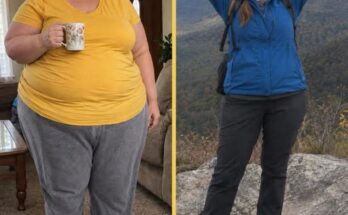
I lost 160 pounds to climb the mountain my late son had dreamed of reaching. But when his twin brother and I finally reached the summit, he pulled out a note Oliver had written before he died. What had my son been hiding, and why had someone kept the truth from me for four years?
“Mom, there’s something I need to tell you about Oliver.”
My son Jacob stood beside me at the summit, holding a crumpled piece of paper.
We had spent nearly six hours climbing the mountain his twin brother had dreamed of reaching.
I’d lost 160 pounds to make this moment possible.
But instead of celebrating, Jacob looked terrified.
“Oliver gave me this before he died,” he whispered. “He made me promise not to tell you anything.”
I stared at the paper.
“Jacob, what are you talking about?”
His eyes filled with tears.
“Someone didn’t want you to find out what really happened to Oliver. And you won’t believe who it was.”
He unfolded the note.
Then he said something that made my knees go weak.
“Dad knew Oliver was sick before that day.”
Four years earlier, I had two sons.
Oliver and Jacob were identical twins, both 12, with the same brown eyes and crooked smiles.
But their personalities were different.
Jacob was quieter, always thinking before he spoke.
Oliver was adventurous. He loved drawing mountains, planning camping trips, and convincing us to explore trails we’d never visited.
My husband, Daniel, and I took the boys hiking whenever we could.
We roasted marshmallows, slept in tents, and watched the sunrise from rocky overlooks.
Oliver had one particular dream.
He wanted to climb a mountain in the Appalachians that he’d seen in a hiking guide.
He drew it constantly.
Sometimes he added our family standing at the summit, four tiny figures holding hands.
“We’re going there someday,” he’d tell us.
Daniel promised we’d make the trip that summer. Oliver started counting the weeks.
But summer never came for him.
One morning, Oliver woke up complaining that he felt terrible.
He was pale, dizzy, and struggling to catch his breath.
At first, I thought he had a stomach virus.
Then he collapsed in the hallway.
Daniel called an ambulance while I knelt beside our son.
“Stay with me, sweetheart.”
Oliver opened his eyes briefly.
“Mom?”
“I’m here.”
Those were the last words we exchanged.
The paramedics worked quickly.
I rode in the ambulance while Daniel followed with Jacob.
Halfway to the hospital, Oliver’s heart stopped.
They tried to revive him.
They couldn’t.
I remember someone speaking to me afterward, but the words seemed impossibly far away.
My beautiful boy was gone.
He was only 12.
Doctors explained that Oliver had suffered a sudden cardiac arrest.
There were questions about what had caused it, but no answer that made his death understandable.
I kept replaying that morning.
Had I missed something?
Should I have checked on him sooner?
Every question ended the same way.
Oliver was gone.
Daniel became distant.
He stopped joining us for dinner and spent hours alone in the garage.
When I tried to talk about Oliver, he changed the subject.
I thought he was grieving differently.
Then, several months after the funeral, he told me he couldn’t stay.
“I can’t live in this house anymore.”
I stared at him.
“What about Jacob?”
Daniel looked toward the stairs.
“I’ll still be his father.”
But he moved out.
His visits became irregular, and eventually Jacob stopped asking when he’d come.
I was so consumed by losing Oliver that I barely understood what was happening to my surviving son.
Food became the only thing that seemed to quiet my thoughts.
I ate when I couldn’t sleep.
I ate when I missed Oliver.
I ate when Jacob was at school, and the house felt unbearable.
Candy, takeout, anything that distracted me for a few minutes.
Before the tragedy, I’d already struggled with my weight.
Two years after Oliver died, I weighed approximately 330 pounds.
Walking home from the grocery store left me breathless.
I avoided photographs and stopped accepting invitations.
Jacob was 14 by then.
He made his own breakfast, washed his clothes, and rarely complained.
Sometimes I caught him looking at me with an expression I couldn’t understand.
I assumed he was worried about my health.
I didn’t realize how much else he was carrying.
One afternoon, while cleaning Jacob’s room, I found an old sketchbook beneath a pile of notebooks.
I recognized the cover immediately.
Oliver had covered it with little drawings of pine trees.
Inside were sketches of trails, tents, and mountains.
Then I turned a page and saw it.
His dream mountain.
Oliver had drawn the summit beneath a bright yellow sun.
Four tiny figures stood at the top.
Underneath, he’d written, “One day, all of us.”
I sat on Jacob’s bed and cried.
For two years, I’d avoided looking at Oliver’s belongings because they reminded me of everything we’d lost.
But that drawing reminded me of something else.
How happy we’d once been outdoors.
How much Oliver had wanted us to keep exploring.
That evening, I showed Jacob the sketch.
“I want to climb it,” I told him.
He studied my face.
“Really?”
“Really. For Oliver.”
Jacob hugged me.
“Then we’ll do it together.”
The next morning, I tried walking around our neighborhood.
I made it less than half a mile before turning back.
My knees hurt, and I was breathing heavily.
I sat on the porch, ashamed.
Jacob came outside.
“How far did you go?”
“Not far enough.”
He sat beside me.
“Then we’ll try again tomorrow.”
That became our routine.
I spoke with my doctor, began changing how I ate, and gradually increased my activity.
At first, Jacob walked beside me around the block.
Later, we tried local trails.
Some days I wanted to quit.
My progress was slow, and I missed the comfort of eating whenever grief overwhelmed me.
But Jacob kept encouraging me.
He made little maps of our walks and marked each new distance.
When I managed my first three-mile trail, he took a photograph.
“Oliver would’ve loved this,” he said.
I smiled.
For once, remembering Oliver didn’t make me want to hide.
Over the next two years, I lost 160 pounds.
It wasn’t a straight line.
There were setbacks, frustrating weeks, and mornings when I questioned whether I could ever manage a mountain.
But my strength improved.
I could climb stairs without stopping.
I could carry groceries without feeling exhausted.
Most importantly, Jacob and I started spending time together again.
We talked during our walks.
Sometimes about school. Sometimes about Oliver.
Jacob still avoided discussing the day his brother died.
Whenever I mentioned it, he grew quiet.
I assumed the memories were too painful.
Looking back, I wish I’d asked more questions.
By the time Jacob turned 16, we were ready to plan the climb.
We researched the trail, checked the weather, and prepared our equipment.
The night before we left, Jacob stood in the doorway of my bedroom.
“Mom, are you nervous?”
“A little.”
He nodded.
“Me too.”
I thought he meant the hike.
We started early.
The mountain air was cool, and sunlight filtered through the trees.
Jacob carried a backpack with water, food, and extra layers. I carried Oliver’s sketchbook in a waterproof pouch.
The first stretch was manageable.
Then the trail grew steeper.
My legs ached, and I needed several breaks.
At one point, I sat on a rock, wondering whether I had enough strength left.
Jacob handed me water.
“We can turn around if you need to.”
I shook my head.
“Not yet.”
He smiled.
“Okay. We’ll take it slowly.”
We continued.
As the trees thinned, the view opened across distant ridges.
I remembered Oliver describing the mountain from his hiking guide.
He’d said he wanted to see how far the world stretched from the top.
When we finally reached the summit, I couldn’t speak.
The mountains rolled away beneath us.
I took out Oliver’s sketchbook and opened it to his drawing.
“We did it, sweetheart,” I whispered. “This is for you, Ollie.”
Then I noticed Jacob wasn’t looking at the view.
He was staring at his backpack.
“Jacob? What’s wrong?”
He reached inside and pulled out a folded piece of paper.
It was worn along the creases.
“Oliver gave me this before he died.”
My chest tightened.
“What is it?”
“He made me promise not to tell you.”
“Tell me what?”
Jacob’s hands shook.
“Someone didn’t want you to find out what really happened to Oliver.”
He looked directly at me.
“It was Dad.”
I felt the wind against my face.
“What do you mean?”
Jacob unfolded the paper.
“Oliver wasn’t feeling well for weeks before he died.”
I stared at him.
“That’s impossible. He never told me.”
“He told Dad.”
Jacob handed me the note.
Oliver’s handwriting was unmistakable.
“Jake,”
“I got dizzy again today. My heart was beating really fast after we came back from walking, even though I wasn’t running.”
“I told Dad like you said. He thinks I’m probably just tired, but he promised we’ll go to the doctor if it happens again.”
“Please don’t tell Mom yet. She worries about everything, and I don’t want her to cancel our mountain trip.”
“I promise I’ll tell her if it gets worse.”
“Ollie.”
I read it three times.
“Jacob, when did he write this?”
“A few days before he died.”
I looked at him.
“You knew?”
He started crying.
“Oliver told me about the dizziness. I kept telling him to say something.”
My heart pounded.
“He said Dad knew, so I thought everything was okay.”
I sat down on a nearby rock.
For four years, I’d believed Oliver’s illness had appeared that terrible morning.
Now I was holding proof that he’d been experiencing symptoms beforehand.
And Daniel had known.
“Why didn’t you tell me?” I whispered.
Jacob covered his face.
“I wanted to.”
He explained that after Oliver died, he’d found the note tucked inside his brother’s school notebook.
He showed it to Daniel.
“Dad read it and started crying,” Jacob said.
“What did he say?”
“He said he should’ve taken Oliver to the doctor.”
I closed my eyes.
“Then he told me you were barely surviving. He said if you found out, you’d blame him and it would destroy what was left of our family.”
Jacob’s voice broke.
“He asked me not to tell you. He said we couldn’t change what happened.”
I stared at my son.
He’d been 12 years old.
A frightened child who had just lost his twin.
And his father had asked him to carry a secret no child should have been given.
“Jacob…”
“I thought if I told you, you’d get even worse.”
He wiped his face.
“Then Dad left, and you stopped eating dinner with me. You barely came out of your room.”
His words hurt because they were true.
“I didn’t want to lose you too.”
I pulled Jacob close.
“I’m so sorry.”
He shook his head.
“I should’ve told you.”
“No. You were a child.”
“But I knew Oliver was getting dizzy.”
“You told him to speak to Dad. You did what a brother could do.”
Jacob cried against my shoulder.
“I keep thinking maybe if I’d told you, you would’ve taken him to the hospital.”
I held him tighter.
“We don’t know what would’ve happened.”
“But maybe…”
“Jacob, listen to me.”
He looked up.
“You were 12. It was never your responsibility to recognize a medical emergency or make decisions for Oliver.”
His face crumpled.
For years, he’d believed he’d failed his brother.
And I’d been so lost in my own grief that I hadn’t seen it.
***
We sat together for a long time.
Eventually, Jacob looked toward the distant mountains.
“There’s something else.”
I waited.
“When you said you wanted to climb this mountain, I was scared.”
“Why?”
“Because you could barely walk to the store. I thought you might hurt yourself trying.”
I remembered those first miserable walks.
“But then you started getting stronger,” he continued. “And you started laughing again.”
His voice trembled.
“I kept helping because I didn’t want to lose you.”
I took his hand.
“I thought we were doing this for Oliver.”
“We were.”
He glanced at the note.
“But I needed you back, too.”
That hurt more than anything he’d said.
I’d spent years mourning the son I lost while the son beside me was afraid of losing his mother.
“I’m here, Jacob,” I said.
He looked at me.
“And I’m going to do a better job of being here.”
Before we left the summit, I placed Oliver’s sketchbook beside the note.
I studied his drawing again.
Four figures beneath the sun.
Oliver had wanted us to stand there together.
We never would.
But Jacob and I had made it.
And for the first time, I understood that honoring Oliver couldn’t mean allowing grief to consume the rest of our lives.
I carefully folded the note and returned it to Jacob.
“Would you like me to keep it?”
He nodded.
“Please.”
I put it inside the sketchbook.
Then we began the descent.
Two days after returning home, I called Daniel.
I hadn’t spoken to him beyond brief conversations about Jacob in months.
“I know about Oliver’s note,” I said.
There was a long silence.
“Jacob told you?”
“Yes.”
Daniel exhaled.
“I never wanted you to find out that way.”
“How did you want me to find out?”
He didn’t answer.
I asked whether Oliver had told him about the dizziness and racing heartbeat.
“Yes,” Daniel admitted.
“He said it happened after he’d been active. I thought he was overtired.”
“And you promised to arrange an appointment?”
“I did.”
“Why didn’t you?”
“I thought there was time.”
His voice cracked.
“I’ve asked myself that question every day since.”
I sat at the kitchen table.
I couldn’t know whether an earlier appointment would have changed what happened.
But Daniel had known something I hadn’t.
And he’d made Jacob hide it.
“You should’ve told me,” I said.
“I know.”
“You made our son believe he had to protect me from the truth.”
Daniel began crying.
“I couldn’t bear the thought of you blaming me.”
“So you let Jacob carry that fear instead?”
He said nothing.
“Whatever happened to Oliver, Jacob didn’t deserve that.”
“You’re right.”
I told Daniel that if he wanted to rebuild his relationship with Jacob, he needed to apologize directly and stop asking him to manage his father’s guilt.
Daniel agreed.
I didn’t offer forgiveness.
I wasn’t ready, but I ended the call knowing I would no longer let his silence dictate what our family could discuss.
That evening, Jacob found me looking through Oliver’s sketchbook.
“Did you talk to Dad?”
“Yes.”
“Was he angry?”
“No, sweetheart.”
Jacob sat beside me.
“Are you angry?”
“Yes. But not at you.”
He nodded slowly.
Then he pointed to another drawing.
It showed our old camping tent beside a lake.
“Remember when Oliver dropped all the marshmallows in the dirt?”
I laughed.
“And tried to convince us they were still good?”
Jacob smiled.
“He ate one anyway.”
We spent the next hour turning pages and remembering things I hadn’t allowed myself to think about in years.
Not just Oliver’s death.
His jokes, his drawings, and the way he always packed too many snacks.
For the first time, Jacob spoke about his brother without worrying about upsetting me.
A week later, I framed Oliver’s drawing of the mountain.
I hung it in our living room beside a photograph Jacob had taken at the summit.
In one picture, four tiny figures stood beneath a yellow sun.
In the other, Jacob and I stood together, exhausted and smiling.
Sometimes I still wonder whether an earlier doctor’s visit could have changed Oliver’s fate.
I may never know.
But I know this: my son Jacob spent four years believing he had to carry his brother’s secret alone.
I climbed that mountain because I wanted to do something for the child I’d lost.
I came down understanding what I needed to do for the child who was still here.
And that mattered more than reaching any summit.