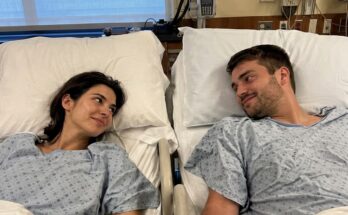
THE STRANGER WHO GAVE ME A KIDNEY—AND THE SECRET HE HID UNTIL OUR WEDDING DAY
A year ago, I thought receiving a kidney from a stranger was the most unbelievable thing that would ever happen to me.
Then I married him.
And only minutes after we said “I do,” Nathan leaned close and told me there was something he should have told me long before I became his wife.
PART 1 — THE STRANGER WHO SAVED MY LIFE
A year earlier, my kidneys had started failing without warning.
I was thirty-one years old and healthy enough to believe hospitals were places other people visited.
Then suddenly, I knew the night nurses by name.
My life became blood tests, dialysis, medication alarms, and waiting rooms filled with people trying not to look afraid.
Every week ended with the same thought:
Maybe this was my life now.
Forever.
When the transplant team tested my family, I pretended I was not scared.
My mother squeezed my hand while the coordinator explained compatibility.
My brother joked that his kidney was “premium stock.”
Even Dad smiled.
Then the results came back.
No one matched.
Two months later, my doctor walked into dialysis with a strange expression.
“We have a volunteer,” he said.
“A living donor.”
I stared at him.
“Who?”
He checked his notes.
“Nathan.”
The name meant nothing to me.
“A stranger wants to give me an organ?”
“Apparently.”
“Why?”
My doctor gave me the careful smile doctors use when they know more than they are saying.
“You can ask him yourself, if both of you agree to meet.”
Three days later, Nathan walked into a hospital conference room carrying two paper cups.
“Tea?” he asked. “Coffee?”
“Coffee. Strong.”
He handed me the darker cup.
I did not touch it.
“Why are you doing this?”
Nathan sat across from me.
“Hello to you too.”
“I’m serious.”
His smile faded slightly.
“I heard about you from Mara. We worked together years ago. She told me you needed a transplant.”
“Lots of people need transplants.”
“I know.”
“So why me?”
Nathan looked down at his hands.
“Because I got tested, and I matched. After that, walking away felt like choosing not to help.”
“You don’t know me.”
“Correct.”
That was all he would give me.
Over the following weeks, there were more tests, more forms, and more opportunities for Nathan to change his mind.
He never did.
On the morning of surgery, he found me crying behind a curtain.
“Hey,” he said. “You’re supposed to be the brave one.”
“You’re the idiot giving away a kidney.”
“One kidney.”
“Still an idiot.”
He pulled the curtain closed behind him.
“Then you owe me something.”
I looked up.
“What?”
“Use it well.”
The operation worked.
My new kidney started functioning almost immediately.
When I woke up, Nathan was alive too.
And somehow, he recovered fast enough to become annoying.
He visited my hospital room wearing hospital socks and carrying contraband pudding.
“You look terrible,” he said.
“You donated the kidney, not your manners.”
“Those were never eligible.”
I laughed and immediately grabbed my side.
“Don’t make me laugh.”
“Finally. Leverage.”
After we were discharged, Nathan kept showing up.
Sometimes with groceries.
Sometimes with books.
Once with a plant I nearly killed.
“You saved me and now you’re assigning homework?” I asked.
“Correct,” Nathan said. “Keep the fern alive.”
Friendship came quietly after that.
Then it grew faster than either of us expected.
We had already shared something enormous before learning the ordinary things about one another.
One evening, rain trapped us beneath the awning outside my building.
Nathan looked at me.
“You know you can stop thanking me.”
“I haven’t thanked you today.”
“Your face has.”
I smiled.
“Rude.”
“Accurate.”
That was the dangerous part.
I started wanting him there even when I did not need him.
PART 2 — THE DIAGNOSIS
A month after the transplant, Nathan knocked on my door after dark.
No groceries.
No book.
No joke.
He stood in the hallway with both hands buried in his coat pockets.
“Can I come in?”
I stepped aside.
He sat at my kitchen table and stared at the fern.
“My doctors found something.”
I looked at the plant.
“It’s still alive.”
“Barely.”
Then I noticed his expression.
“What’s wrong?”
Nathan swallowed.
“My doctors found something during my follow-up.”
Every muscle in my body tightened.
“Because of the donation?”
“No. Something unrelated. They caught it during additional testing.”
He finally looked at me.
“It’s cancer.”
I sat down.
“What kind?”
Nathan answered, but the name barely registered.
I heard only the words that mattered.
Aggressive.
Advanced.
Terminal.
Treatment might give him more time.
It would not cure him.
Then came the sentence that hollowed out the room.
“They don’t know exactly how much time I have.”
I reached across the table.
Nathan took my hand.
“I don’t want to spend whatever time I have left alone.”
“You won’t.”
He laughed once without humor.
“Careful.”
“I’m serious.”
“So am I.”
Nathan stood, reached into his coat, and placed a small box beside the dying fern.
I stared at it.
“Nathan.”
“I know this is fast.”
“Fast?”
My voice cracked.
“This is insane.”
“Probably.”
“You could be dying.”
“Exactly.”
He opened the box.
The ring was simple.
Silver.
Almost painfully ordinary.
“Marry me.”
I stood and walked toward the sink.
“You cannot tell me you have cancer and propose in the same conversation.”
“I know.”
“Do you?”
“I know I love you.”
I turned around.
“Do you want a wife, or are you terrified?”
Nathan flinched.
“Both can be true.”
That answer frightened me because it sounded honest.
I looked at the man who had stepped into my life before he even knew me.
I thought about his hospital room.
The ridiculous pudding.
His hand in mine.
Illness had already taught me how little time cared about what was reasonable.
“I need one promise.”
“Anything.”
“No lies.”
Nathan held my gaze.
“No lies.”
I said yes.
PART 3 — THE WEDDING
We planned a wedding small enough to fit inside the garden room behind a local restaurant.
My parents came.
My brother complained about his tie.
Mara cried before the ceremony even started.
Treatment had not begun yet, and we tried not to think of every meal as a possible last meal.
On the morning of the wedding, I asked Nathan one final time:
“Are we doing this because we’re scared?”
He squeezed my fingers.
“We’re doing it because we’re scared and because I love you.”
“Okay.”
The ceremony lasted twelve minutes.
I remember because my brother timed it and whispered, “Efficient,” while we signed the papers.
Nathan laughed.
I did too.
Then the officiant pronounced us husband and wife.
Everyone applauded.
I turned toward Nathan expecting relief.
Instead, his expression changed.
His smile vanished so completely that my stomach dropped.
He took my hand and leaned close enough that no one else could hear.
“Now I can finally tell you the truth.”
My fingers went cold.
“What truth?”
Nathan glanced toward the doors.
“I have a daughter.”
The room seemed to shrink around me.
“What?”
“Her name is Sophie. She’s twelve.”
I stared at him.
“You have a twelve-year-old daughter, and you waited until after we got married to tell me?”
“I was going to tell you sooner.”
“You promised me no lies.”
“I know.”
“Where is she?”
“With her grandmother. She stays there during the school week. I have her most weekends and part of every summer. Her mother hasn’t been involved consistently since the divorce.”
“Does she know about me?”
“Yes.”
That answer hurt even more.
“So your daughter knew I existed while I didn’t know she existed?”
Nathan rubbed his face.
“She knows about the transplant. She knows about us. She refused to meet you.”
“Why?”
“Because she thinks I replaced her.”
I laughed sharply.
“Did you?”
“No.”
“Then why hide her?”
“Every time I mentioned you, she became upset. Then the diagnosis happened. I panicked. I kept thinking I would find the right moment, and every time I waited, telling you became harder.”
“You still married me without telling me.”
“I know.”
“Why?”
Nathan looked away.
“I thought if we were married, maybe Sophie would understand that you weren’t temporary.”
I stepped backward.
“You married me to solve a problem with your child?”
“No. I married you because I love you.”
“But you used our wedding to force an introduction.”
Nathan did not answer.
That was enough.
I walked out through the side door while our guests were still drinking champagne.
Nathan followed me into the parking lot.
“Please don’t leave like this.”
I turned around.
“Stay.”
“What?”
“Stay here. For once, don’t decide what happens next.”
He stopped.
I held out my hand.
“Give me her grandmother’s address.”
His face tightened.
“Sophie isn’t ready.”
“You’ve made too many decisions for other people.”
“She could hate you.”
“Maybe. But she gets to decide that—not you.”
Nathan stared at me for a long moment.
Then he unlocked his phone.
PART 4 — SOPHIE
Sophie’s grandmother lived twenty minutes away.
I drove there in my wedding dress with the seat belt digging into my ribs.
An older woman opened the door.
“You must be Claire.”
“Is Sophie here?”
She nodded.
“She doesn’t want to talk to you.”
“I figured.”
“Nathan called.”
“Of course he did.”
She almost smiled.
“You can sit on the steps.”
So I did.
Ten minutes passed.
Then fifteen.
Finally, the door opened behind me.
“This is weird,” a girl said.
I turned.
Sophie had Nathan’s eyes and the same unimpressed expression.
“Probably,” I replied.
She crossed her arms.
“Did you marry my dad because you felt sorry for him?”
I could have lied.
Instead, I said, “Fear affected the timing. But no, I didn’t marry him out of pity.”
Sophie studied me.
“Then why did he give you part of himself before he even knew you?”
I opened my mouth.
Then stopped.
Her anger was not really about me.
It was fear wearing armor.
“Everyone thinks he’s amazing,” she said.
“He is.”
“See?”
“And you have every right to be angry at him.”
That made her pause.
Barely.
“You think he’ll keep giving pieces of himself away until there’s nothing left for you,” I said.
Her expression changed.
She sat beside me.
“He fixes everybody’s problems,” she said. “Neighbors. Friends. People from work. Somebody calls at midnight, he’s already finding his keys.”
I listened.
“Everyone says he’s generous. Nobody asks what it costs us.”
I looked down at the ring on my hand.
I had loved Nathan’s generosity because I had benefited from it more than anyone.
Sophie had lived with the cost.
“He should have told me about you.”
“Obviously.”
“And he should stop treating love like making decisions alone.”
Sophie snorted.
“Good luck.”
PART 5 — THE TRUTH IN FRONT OF EVERYONE
When I returned to the venue, the party was over.
But no one had gone home.
My parents stood near the empty tables.
My brother had loosened his tie.
Mara sat with both hands wrapped around an untouched glass of champagne.
Nathan waited beside the garden doors.
My mother came toward me first.
“Are you all right?”
“No.”
Her eyes moved toward Nathan.
“What happened?”
Nathan opened his mouth.
I stopped him.
“Tell them.”
His face went pale.
“Claire—”
“You wanted to control when everyone learned the truth. You don’t get to do that anymore.”
Silence settled over the room.
Nathan looked at my parents, then at my brother.
“I have a twelve-year-old daughter,” he said. “And I married Claire without telling her.”
My mother’s expression shifted from disbelief to anger.
“You let my daughter make a legal promise to you without giving her the truth.”
Nathan looked down.
“Yes.”
Dad stepped beside her.
“Why?”
Nathan’s jaw tightened.
“I told myself I was protecting Sophie. Then I told myself I was protecting Claire. Really, I was making sure neither of them had the chance to tell me no.”
Nobody rushed to comfort him.
Not Mara.
Not my parents.
Not me.
I walked closer.
“Our marriage continues only if this stops.”
Nathan looked at me.
“What stops?”
“You deciding what everyone needs and then calling it love.”
His eyes closed for a second.
“Sophie says that too.”
“Then maybe you should finally listen to her.”
Nathan nodded.
Then he looked at my family.
“I’m sorry. Not because Claire found out. Because I took away her choice.”
My mother folded her arms.
“Then give it back.”
Nathan turned toward me.
And this time, he waited.
“Claire, do you want me to leave?”
“No,” I said. “But you’re going to learn to ask.”
FINAL — LEARNING TO ASK
The months that followed were messy.
Sophie called me Claire.
She stayed with us twice, then refused to visit for three weeks.
Nathan kept his weekends with her even when medical appointments or requests from other people threatened to take over.
He began asking whether she wanted to attend certain appointments instead of deciding what she could handle.
I stopped letting him manage my medication schedule.
“I can handle my own pills,” I told him.
“I know.”
“Practice it.”
Treatment was difficult.
Some scans gave us hope.
Others gave us more questions.
The doctors never took back the word terminal, and nothing about Nathan’s future became certain enough for us to relax.
But something else changed.
Nathan stopped treating uncertainty like permission to make everyone else’s choices.
That summer, the three of us had a picnic in the same garden where Nathan and I had married.
Sophie handed me a wrapped box.
Inside was a cheap mug.
It read:
WORLD’S MOST COMPLICATED STEPMOM
I laughed.
Nathan did too.
Sophie pointed at him.
“Don’t get smug. Yours is worse.”
His mug read:
ASK YOUR FAMILY FIRST
Nathan groaned.
“Fair.”
“Very fair,” Sophie said as she stole a strawberry from his plate.
I leaned against Nathan’s shoulder.
For once, he was not saving anybody.
He was not making decisions for us.
He was not trying to fix the future.
Nathan looked from his ridiculous mug to Sophie and then to me.
For once, he was simply sitting with his family.