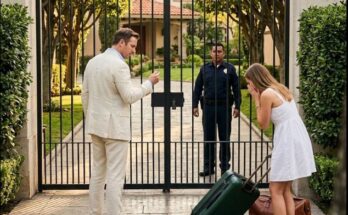
Mariana Salazar learned early that paper could save a person or destroy one. Her grandmother, Ms. Guadalupe Salazar, taught her that at the kitchen table in Querétaro, with bills spread beside red rice and coffee.
Lupita never treated documents like clutter. Receipts went into envelopes. Deposit slips went into a tin box. Medical forms from the IMSS hospital were folded carefully, dated, and kept where no one careless could reach them.
After Mariana’s mother died in an accident when Mariana was five years old, Lupita became mother, father, teacher, and shelter. She braided Mariana’s hair before school and checked every backpack pocket before signing a paper.
Victor Salazar, Mariana’s father, visited when it benefited him. He came with cologne, excuses, and the kind of smile that made apologies sound like favors. When Mariana cried, he called it making drama.
Patricia arrived later, polished and cold behind dark glasses. Diego, Mariana’s half brother, learned the family language quickly. Jokes were never just jokes in that house. They were small knives passed around as entertainment.
For years, Mariana tried to believe blood meant safety. She once trusted Victor with family paperwork after he said he only wanted to help organize things. Lupita watched his hands too closely that day.
That was the first time Mariana saw her grandmother take back a folder without raising her voice. Lupita simply said, “A person who rushes you with papers is already telling you something.”
The warning stayed in Mariana’s mind, but it did not make sense until the last week of Lupita’s life. By then, the IMSS room smelled of disinfectant, cotton sheets, and the metal rail of the hospital bed.
Lupita’s hands were thin, but her grip was still exact. She called Mariana close and whispered, “When they tease you, let them. Then go to the bank.” Mariana thought fever had tangled the words.
A week later, Licenciado Arriaga gathered the family before the funeral. He opened a stamped folder and read the will in a voice that shook only once, as if he already knew the room would turn ugly.
“To my granddaughter Mariana Salazar I leave my savings book and all the rights linked to it.” That was the line. Not a house. Not jewelry. Not cash counted on a table.
Victor’s face hardened before anyone else reacted. Patricia’s mouth tightened behind her veil. Diego looked bored until he realized his father had been left nothing at all. Then the joke began forming in him.
The funeral happened under rain. The pantheon smelled of mud, wet flowers, and candle wax trapped under the funeral tent. Mariana wore a borrowed black dress because grief had arrived faster than money.
Victor waited until the coffin was open and everyone was watching. Then he pulled the blue savings book from the notary’s folder and dropped it onto Lupita’s coffin like trash.
“That notebook is worth nothing. May it rot with the old lady.” The book hit the polished wood with a soft slap. Rain tapped above them like fingernails on a locked door.
No one defended Lupita. One uncle stared at his shoes. A cousin covered her mouth but stayed silent. The priest looked down at his prayer book, as if mercy had suddenly become too heavy.
Patricia whispered that Mariana still thought the lady had left her treasure. Diego leaned close and said if she brought fifty pesos, she could buy tacos. Somewhere behind them, a cousin laughed.
That laugh did something to Mariana. Not loudly. Not all at once. It made the shaking in her hands stop, and the cold in her chest become useful.
Cruelty in a crowd has a special smell. Wet wool, cheap cologne, damp earth, and the sour fear of people who know something is wrong but prefer not to pay for saying so.
Mariana stepped toward the coffin. Victor caught her arm and told her not to be ridiculous in front of everyone. She looked him straight in the face and said, “You already did that for me.”
For one second, she imagined tearing his gloved hand away and saying every ugly thing he had earned. Instead, she pulled free, climbed down carefully, and took the blue book from Lupita’s coffin.
The cover was damp. Mud clung to one corner. It smelled like wet paper, old leather, and the inside of Lupita’s purse. Mariana pressed it to her chest and said, “It was hers. It’s mine now.”
Victor moved close enough that tequila showed through his breath. “Your grandmother couldn’t save her house,” he said. “Do you think she saved you?”
Mariana did not answer. She put the savings book in her bag and walked toward the rusty gate. Diego stepped into her path and asked where she thought she was going.
“To the bank,” Mariana said.
They laughed as she left. Victor laughed the loudest. But Licenciado Arriaga did not laugh. He stood under the funeral tent, pale, watching her like he had seen a match fall into gasoline.
One hour later, Mariana entered the Banco del Bajío branch in downtown Querétaro. Her dress was soaked at the hem. Mud marked her shoes. The fluorescent lights buzzed above the smell of disinfectant and wet umbrellas.
The cashier, Maribel, looked tired until she opened the savings book. Then tiredness disappeared. She read Guadalupe Salazar’s name, then Mariana’s full name, then the beneficiary notation printed beside the account record.
Maribel checked the ledger. She checked the signature card. She checked the small internal flag attached to the account. With every click of the keyboard, more color left her face.
“Call the police,” she told another employee. “And close the door. The young lady cannot leave.”
Mariana felt the lock click behind her. For one terrible moment, she thought her father had been right. Maybe the book was not a gift. Maybe it was a trap.
Maribel must have seen the fear on her face, because she lowered her voice. “You are not in trouble,” she said. “But someone tried to make sure you never reached this counter.”
The branch manager came out carrying a brown envelope from a locked drawer. It had Guadalupe Salazar’s handwriting on the front: For Mariana only, if Victor follows.
Inside were copies of a power-of-attorney request, a rejected beneficiary change, and a photocopy of an identification document Mariana had never signed. Victor Salazar’s name appeared near the request line.
The manager explained carefully. Lupita had placed an alert on the account after someone attempted to change access using incomplete documents. The bank had been instructed to contact police if Mariana appeared with the original book.
That was why Maribel had gone pale. The account was not a forgotten pocket of savings. It was linked to a protected file, a safe-deposit record, and rights Lupita had preserved through the notary.
Then Victor arrived.
He came through the glass doors still wearing his funeral suit, with Patricia behind him and Diego carrying the black umbrella. His smile was ready before he saw the police officer standing near the counter.
“My daughter is confused,” Victor said quickly. “Her grandmother was old. Mariana gets emotional. I’ll handle the book.”
Maribel did not move. The manager did not hand anything over. Licenciado Arriaga arrived moments later, rain shining on his shoulders, carrying another sealed document from his office.
The police officer asked Victor how he knew Mariana was at the bank. Victor said he guessed. Patricia looked at the floor. Diego stopped smiling for the first time that day.
Arriaga placed his folder beside the blue book. “Ms. Guadalupe expected this,” he said. “She asked me to release the second declaration only if Victor attempted to interfere with Mariana’s access.”
The room went still. The declaration stated that Lupita believed Victor had taken family documents years earlier and might attempt to block Mariana from receiving anything linked to her mother’s estate.
There was no shouting after that. Shouting belongs to people who still believe volume can change ink. Victor stared at the papers as if they had betrayed him personally.
The police did not arrest him in the middle of the bank. They took statements, copied the bank ledger, photographed the savings book, and collected the attempted authorization forms for review.
Mariana signed only after reading each page. Lupita would have been proud of that. Her hands shook, but her eyes moved line by line, refusing to be hurried by grief or intimidation.
Over the following weeks, Arriaga helped Mariana file the civil claims tied to the account and property records. Banco del Bajío preserved the internal logs showing the failed access attempts and dates.
The safe-deposit file held more than money. It contained Lupita’s original deed paperwork, tax receipts, deposit records, and a signed explanation connecting the savings book to rights Victor claimed no longer existed.
Victor had told the family Lupita lost everything. The documents told a different story. She had been fighting quietly, legally, and patiently while everyone around her mistook silence for weakness.
Patricia stopped calling Mariana poor little thing. Diego stopped joking about fifty pesos. Several cousins later claimed they had always known Victor went too far, but Mariana remembered the funeral clearly.
One uncle apologized in a message. Mariana did not answer immediately. Forgiveness, Lupita used to say, is not a receipt people get just because they finally dislike the evidence against them.
Months later, the court confirmed Mariana’s rights under the will and the linked account file.
End Part Here: Grandma’s Blue Savings Book Exposed a Family Lie at the Bank