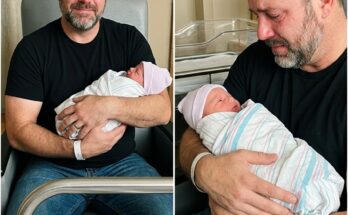
I was in the observation room with Marissa when Ellie asked to speak without Thomas present.
You could hear almost nothing through the door, only the muffled rhythm of voices, the scrape of a chair, the soft flat buzz of fluorescent lights over everything. I sat with both hands wrapped around a paper cup of water I never drank.
Finally the detective stepped out and asked if I was willing to stay longer.
“As long as it takes.”
He nodded.
Then he told me enough to change the shape of the whole day.
Ellie had admitted Thomas lost his temper during diaper changes when Mason cried. She said he gripped too hard. Once was an accident, she said. Then another. Then she stopped using that word.
She admitted they had discussed hiding the bruise before they called me. Bath. Clean onesie. Let Grandma hold him for an hour. If he settled, maybe the mark would lighten. If it didn’t, they would say it happened with me.
There it was.
Not just harm.
A plan.
The room went very still around me. My heartbeat felt suddenly loud and slow, like footsteps in a church.
“Is she being charged too?” I asked.
“Right now our first priority is the baby’s safety,” the detective said.
That was not an answer, which told me enough.
Mason was admitted for observation that evening. The child protection team documented everything. CPS initiated emergency protective action.
Detective Cole requested the digital recordings from the nursery camera and served notice before Thomas could think to wipe them. The hospital kept Mason under supervision. I was interviewed twice more. By then the sun had gone down and the ER windows had turned black and mirror-like.
At 8:06 p.m., Marissa found me in the family waiting room and sat beside me.
“You have been very clear all day,” she said.
“I had to be.”
“Yes,” she said. “You did.”
Then she handed me a form.
Temporary kinship placement paperwork.
For one second I could only stare at it. The paper looked ordinary. Hospital copier paper. Slightly warm from the printer. My own name typed where a line of strangers’ names might have gone if I had answered my son’s call, believed his excuses, and driven that baby back to the apartment.
I signed.
The pen scratched softly across the page.
No ceremony. No music. No speeches.
Just one legal line after another shifting a baby away from danger.
When I finally stepped into Mason’s room upstairs, he was sleeping in a clear hospital bassinet under a thin striped blanket. A nurse had tucked a tiny knitted octopus beside him, the kind volunteers make for NICU babies. His face looked smaller without the screaming. Younger. The bruise was still there, ugly and impossible, but no longer hidden.
I stood over him with one hand on the plastic rail.
The hallway behind me smelled like sanitizer and warmed formula. Monitors pulsed from other rooms. Rubber soles whispered over polished floors. My body felt fifty pounds heavier than it had that morning.
Thomas was not there.
Ellie was not there.
For the first time all day, the absence told the truth more clearly than any argument had.
I leaned down and adjusted the edge of Mason’s blanket with two fingers so I wouldn’t wake him.
Then I pulled my phone from my purse and opened the last text Thomas had sent me before the detective took his statement.
You had no right to undress him.
I looked at those words for a long time.
Then I forwarded the screenshot to the family attorney handling my late husband’s estate, because the condo lease, the car note, and one account Thomas still thought of as “his emergency backup” had all been tangled for years in paperwork he had never bothered to read closely enough.
Quiet power does not always enter in a uniform.
Sometimes it enters in a widow’s reading glasses, a clean signature, and a lawyer who still owes your husband a favor.
By 9:12 p.m., I had done three things.
I authorized the hospital to list me as Mason’s immediate safe contact.
I sent the screenshot package to the attorney.
And I left one voicemail for Thomas—steady voice, no tears.
“You will not contact me about bringing him home,” I said. “You will speak to investigators. You will speak to the court. That’s all.”
I ended the call before he could answer.
The attorney called back eight minutes later.
His voice was low, brisk, fully awake now.
“Helen,” he said, “I’ve reviewed what you sent. There are protections we can put in place tonight. And there is one thing Thomas is about to learn the hard way.”
I stepped out into the corridor so the nurse wouldn’t hear the rest.
The floor was cold through my shoes. A cart rattled past. Somewhere a baby cried once, then settled.
“What thing?” I asked.
“That the account he thinks he can use for legal fees tomorrow morning,” the attorney said, “was never solely his to begin with.”
I closed my eyes.
Not from relief.
From clarity.
Inside the room, Mason slept on, one tiny fist curled near his cheek, the bruise still visible beneath the edge of the hospital blanket, no longer protected by lies, no longer hidden under cotton.
And for the first time since 2:16 that afternoon, I knew exactly what came next.