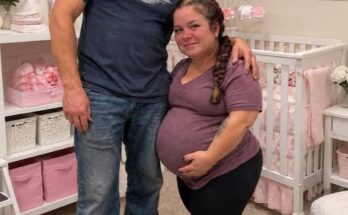
After 30 years of being mocked for my height, I finally found love and got pregnant. But at seven months, my mother-in-law offered me $100,000 to leave my baby at the hospital. I refused. When she showed up after the birth, the nurses suddenly rushed to my daughter’s bassinet. What was happening?
“Do you think someone like you should be having children?”
My mother-in-law, Patricia, asked me that while I was helping set the table for Sunday dinner.
I was three months pregnant.
“What do you mean?”
She glanced at my stomach.
“With your condition, Sarah.”
“Michael and I have discussed everything with our doctors.”
Patricia frowned.
“Doctors don’t know everything.”
Before I could respond, Michael entered the kitchen.
“Everything okay?”
Patricia immediately smiled.
“Of course, sweetheart. Just asking how Sarah’s feeling.”
I wondered why she’d changed her tone so quickly.
I didn’t know then how far she would go to keep me from raising my child.
I was born with dwarfism.
At 3 feet 8 inches tall, I’d spent most of my life being treated like a joke.
In elementary school, children called me “doll” and “little freak.”
By high school, boys dared each other to ask me to prom.
One actually did.
I spent an afternoon choosing a dress before discovering it was a prank.
When I said yes, his friends burst out laughing.
I never went to prom.
Adulthood wasn’t much kinder.
Some men rejected me immediately. Others treated my height as a curiosity.
By 35, I’d stopped believing anyone could genuinely love me.
Then I met Michael.
He was 42, tall, handsome, and easy to talk to.
On our first date, he pulled out my chair, asked about my work, and listened.
He never mentioned my height.
When he called the next morning, I almost couldn’t believe it.
Michael and I married two years later.
He never treated my body as something embarrassing.
When strangers stared, he simply held my hand.
His mother was harder to understand.
Patricia was polite but distant.
At our wedding, she congratulated us without hugging me.
Whenever Michael mentioned wanting children, she changed the subject.
I assumed she worried about medical complications.
I had concerns myself.
Because of my particular form of dwarfism and medical history, pregnancy required careful planning.
Michael and I met with specialists before trying.
We discussed possible risks, the monitoring I’d need, and why a planned C-section would be safest.
Nothing was guaranteed, but we made an informed decision together.
When I discovered I was pregnant at 38, I cried so hard Michael thought something was wrong.
“Sarah? What’s happened?”
I handed him the test.
He stared at it.
Then he started crying too.
Michael attended every appointment he could.
He assembled the crib and painted the nursery pale yellow.
We chose the name Charlotte.
My doctors monitored me closely, and the pregnancy progressed well.
But Patricia became increasingly uncomfortable.
When Michael showed her an ultrasound photograph, she barely glanced at it.
“Are you sure this is a good idea?”
Michael frowned.
“Mom, we’ve been over this.”
“I’m only concerned.”
“Then ask how Sarah is doing instead of questioning whether we should have a child.”
Patricia didn’t say a word.
At six months, she visited our home and stared at Charlotte’s nursery.
“You’ve certainly bought a lot.”
“Babies need things,” I said.
She touched the crib.
“People get attached to plans that don’t always work out.”
I asked what she meant.
She claimed she was being realistic.
At seven months pregnant, Patricia invited me to lunch.
Michael was working, and she specifically asked that I come alone.
I hoped she wanted to repair our relationship.
When I arrived, she had tea waiting.
After several awkward minutes, Patricia disappeared into another room.
She returned carrying an envelope.
“I’ve been thinking about your situation.”
“My situation?”
She slid a check across the table.
$100,000.
“What’s this for?”
Patricia folded her hands.
“When the baby is born, leave it at the hospital. I’ll arrange everything.”
I stared at her.
“You want me to abandon my child?”
“Think of it as giving the baby a better life.”
“Are you offering me money to give up Charlotte?”
“I’m offering you a chance to do what’s best for her.”
“She’s my daughter.”
“That doesn’t necessarily mean you’re the best person to raise her.”
I pushed the check back.
“Get out of my life.”
Patricia picked it up.
“Then don’t say I didn’t warn you.”
I struggled to stand.
“Don’t contact me again.”
“You’re being emotional, Sarah.”
“No. I’m being clear.”
I left before she could respond.
In my car, I sat gripping the steering wheel.
I’d heard cruel things about my body for 30 years.
But nobody had ever suggested I should surrender my child because of it.
When Michael came home, I told him everything.
He looked stunned.
“She offered you how much?”
“A hundred thousand dollars.”
“And she said to leave Charlotte at the hospital?”
I nodded.
Michael reached for his phone.
I stopped him.
“Please don’t call her while you’re this angry.”
He sat beside me.
“She’s never coming near our baby.”
For once, I didn’t try to soften his words.
Michael called Patricia the following morning.
He told her that what she’d done was unacceptable and that she wasn’t welcome in our home or at the hospital.
Patricia insisted she’d only been trying to help.
“Help whom?” Michael asked.
He ended the call.
For the rest of my pregnancy, we didn’t speak to her.
At 36 weeks, I folded Charlotte’s clothes into drawers.
At 37 weeks, Michael installed her car seat.
We prepared for my scheduled C-section and kept my hospital bag near the door.
Three days before the scheduled delivery, I woke with contractions.
“Michael,” I whispered.
He was awake instantly.
We called the hospital and followed their instructions.
My doctors assessed me and prepared for surgery sooner than planned.
Michael held my hand.
“You’re going to meet our daughter today.”
At 38 weeks, Charlotte arrived.
I heard her cry before I saw her.
“She’s perfect,” Michael whispered.
Our daughter weighed six pounds.
She had a tiny button nose, dark hair, and impossibly small fingers.
After the necessary checks, a nurse helped place Charlotte against my chest.
For the first time in my life, I wasn’t thinking about everything people had said was wrong with my body.
I was thinking about what it had done.
It had carried my daughter.
“Hello, Charlotte,” I whispered.
Michael kissed my forehead.
We were both crying.
I thought nothing could interrupt that moment.
I was wrong.
Less than an hour later, a nurse entered my recovery room.
“There’s a woman downstairs claiming to be the baby’s grandmother.”
My heart sank.
“Patricia?”
The nurse checked her notes.
“That’s the name she gave.”
“She’s not welcome.”
The nurse hesitated.
“She says there’s been a mistake.”
Before I could ask what she meant, another nurse hurried inside.
She examined Charlotte’s identification band.
“Who brought this baby into the room?”
Michael stood.
“What do you mean?”
“Please, nobody touch the bassinet for a moment.”
I tried to sit up.
Pain shot through my abdomen.
“What’s happening? That’s my daughter!”
The nurse reassured me but explained that she needed to verify a discrepancy in Charlotte’s identification record.
Then shouting erupted in the hallway.
“I am her grandmother! You can’t keep me out!”
Patricia.
Michael moved toward the door, but the nurse asked him to remain nearby.
Another staff member arrived with the delivery records.
They checked Charlotte’s ankle band against my wristband and the information documented at birth.
One number had been entered incorrectly in a transfer record.
The identification bands matched.
Charlotte had remained with the appropriate care team throughout.
She was our daughter.
I began crying from relief.
“I’m sorry we frightened you,” the nurse said. “We needed to make sure everything was correct.”
Patricia’s voice rose outside.
“Michael, tell them I have a right to see my granddaughter!”
Michael looked at me.
I didn’t want Patricia near Charlotte.
But I wanted to know why she’d come.
“Talk to her outside,” I said. “Don’t let her in here.”
Through the door, I heard Michael confront his mother.
“How did you know we were here?”
“Your aunt mentioned Sarah was due this week. I called to ask if the baby had arrived.”
“Why did you come?”
“I thought you might need help making arrangements.”
“What arrangements?”
A pause followed.
“For Charlotte.”
Michael’s voice sharpened.
“What have you done?”
Patricia began speaking quickly.
She’d prepared a nursery at her house.
She’d purchased a crib, clothes, and everything a newborn needed.
She’d even told relatives she expected to be Charlotte’s primary caregiver.
I stared at the door.
The check.
The warning.
The way she’d looked at Charlotte’s nursery.
Suddenly, those moments meant something different.
Michael returned, his face pale.
“Sarah, Mom wasn’t planning to give Charlotte to another family.”
“What?”
“She wanted to take her home herself.”
My mouth went dry.
“She thought if she offered you enough money, you’d leave the baby and walk away.”
I looked toward Charlotte’s bassinet.
“She wanted my daughter.”
Michael nodded.
“She told relatives she’d be raising her.”
“Did you know?”
“No. I swear I didn’t.”
I believed him.
But I couldn’t understand how Patricia had convinced herself we’d agree.
“Why would she think this was right?”
Michael shook his head.
“She keeps saying she knows what’s best.”
I wanted her gone.
Yet another question bothered me.
Why was she so certain that separating a mother from her baby was the right thing to do?
Patricia was still waiting outside.
I asked Michael to bring her to the doorway, with a nurse nearby.
She wasn’t coming into my room.
When she appeared, her eyes searched for the bassinet.
“Is Charlotte all right?”
“She’s fine. And she’s staying with us.”
Patricia looked away.
“I never meant to upset you.”
“You offered me $100,000 to abandon my daughter.”
“I wanted her to have stability.”
“With you?”
She didn’t answer.
“Why, Patricia?”
Her eyes filled with tears.
“You don’t understand what can happen to a child who’s different.”
I stared at her.
“I understand better than you think.”
She shook her head.
“No. You don’t understand what it does to a mother.”
Michael stepped closer.
“Mom, what are you talking about?”
Patricia looked at him.
Then she whispered, “You weren’t my first child.”
Michael went still.
“What?”
“Before you were born, I had a little girl.”
Her name was Anna.
Anna had been born with dwarfism.
Patricia’s husband and his family reacted badly.
They convinced her that Anna would suffer and that Patricia wasn’t equipped to raise her.
Young and frightened, Patricia agreed to let another family adopt her daughter.
Michael stared at her.
“You had a daughter?”
Patricia nodded.
“And you never told me?”
“I couldn’t.”
She wiped her cheeks.
“I spent years telling myself I’d given her a better life.”
I looked at Charlotte.
Then back at Patricia.
“Do you know what happened to Anna?”
Patricia shook her head.
“I received one letter saying she was healthy. After that, nothing.”
Her voice broke.
“I don’t even know if she’s alive.”
For a moment, nobody spoke.
I felt sorrow for the frightened young woman Patricia had once been.
But I also felt anger.
“You tried to make me do what you did.”
Patricia looked down.
“I thought you’d understand eventually.”
“Understand what?”
“That love doesn’t always mean keeping a child.”
I took a breath.
“Sometimes that’s true. But you never asked what I wanted, or what Charlotte needed.”
Patricia began crying.
“When I saw you pregnant, all I could think about was Anna. Everyone told me she’d be miserable because she was different.”
“And seeing me happy made you question them?”
She didn’t answer.
I understood then.
Patricia had spent decades defending her decision.
If I could raise Charlotte with love despite my disability, perhaps Anna could have been raised with love too.
That possibility was more painful than Patricia wanted to face.
So she’d tried to make me repeat her choice.
Michael looked at his mother.
“Did Dad know about Anna?”
“Of course.”
“And he never told me?”
“We agreed not to discuss it.”
Michael shook his head.
“I grew up thinking I was your only child.”
Patricia reached toward him.
“Michael, please.”
He stepped back.
“You should have told me.”
“I was ashamed.”
“I understand that you’re hurting. But you tried to take my daughter away from her mother.”
Patricia began sobbing.
“I only wanted to protect her.”
“No,” Michael said. “You wanted to feel certain that what happened to Anna had to happen.”
She stared at him.
“Charlotte isn’t Anna. Sarah isn’t you. And you don’t get to decide our daughter’s future.”
Patricia looked toward me.
“Can I at least see her?”
I shook my head.
“Not today.”
For once, Patricia didn’t argue.
She left.
The following days were exhausting.
I was recovering from surgery, learning to feed Charlotte, and sleeping in short stretches.
Michael helped with everything.
Sometimes, while Charlotte slept, we talked about Anna.
He was devastated to learn he had a sister he’d never known.
He wanted answers but understood that finding her might not be possible.
We agreed he could explore that history when he was ready.
But Charlotte’s arrival wasn’t going to become another chapter in Patricia’s attempt to justify her past.
Our daughter deserved a peaceful beginning.
When we brought Charlotte home, Michael carried her through the front door.
I followed slowly.
He placed her in the crib we’d assembled together.
She opened her eyes, stretched, and fell asleep again.
I laughed.
After everything, that ordinary moment felt extraordinary.
Patricia sent a letter two weeks later.
She apologized for the check and admitted that preparing a nursery without our consent had been wrong.
She also wrote about Anna.
For the first time, she acknowledged that she didn’t know whether giving her daughter away had been the right decision.
Michael read the letter twice.
Then he asked what I thought.
“I think she’s beginning to face what happened.”
“Does that mean we should let her visit?”
“Not yet.”
He nodded.
Patricia’s pain deserved compassion, but compassion didn’t require us to ignore what she’d done.
If she ever became part of Charlotte’s life, it would be because she’d learned to respect us as her parents.
Not because she was lonely or felt guilty.
And certainly not because she’d offered money.
One evening, I sat in Charlotte’s nursery while Michael prepared dinner.
She was asleep against my chest.
I studied her tiny face and thought about what I wanted her to know.
That she was loved.
That her body belonged to her.
That being different would never make her less deserving of respect.
For 30 years, people had tried to convince me that my height made me unworthy of love.
I’d believed them for too long.
Patricia had believed something similar about her own daughter, and that belief had shaped her life.
I couldn’t change what happened to Anna.
But I could make sure Charlotte never questioned whether she belonged with us.
I kissed her forehead.
“You don’t have to prove anything to anyone, sweetheart.”
She stirred, then settled against me.
Patricia had offered $100,000 to make me leave my baby at the hospital.
She’d believed money could persuade me to surrender the life I’d waited so long to build.
But as I held my daughter, I knew there was no amount of money in the world that could make me walk away from her.
So here’s the real question: If you were in Sarah’s position, would you ever allow Patricia to be part of your daughter’s life after what she did, or would you cut ties with her permanently?