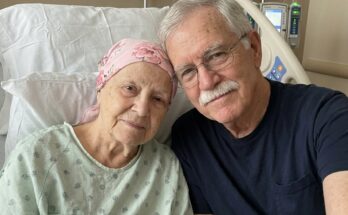
My grandfather passed away alone in a small Ohio hospital while my parents called him “difficult” and stayed home. I was the only one at his funeral, and I believed the old ring I took from his bedroom drawer was the last piece of him I had left—until a general noticed it at a military ceremony, went pale, and asked me a question that shattered everything I thought I knew about him.
My grandfather, Thomas Hail, was the quietest man I ever knew.
He lived in a small, weathered house on the edge of a quiet Ohio town—the kind with cracked sidewalks, chain-link fences, and neighbors who still waved from their porches. He didn’t talk much. He never bragged. There were no medals on the walls, no framed photos, no dramatic stories saved for holidays. If you ever asked about his time in the military, he would just smile and say, “That was a long time ago, sweetheart.”
My parents took that silence as proof that none of it mattered.
To them, he was just difficult. Too private. Too stubborn. Too poor to be useful and too quiet to be interesting. He was only invited when I insisted. At family dinners, he sat like someone who didn’t quite belong. My brother used to joke that Grandpa’s real talent was making people uncomfortable. No one ever corrected him.
Then Grandpa got sick.
I was stationed two states away with the Marine Corps when a neighbor called to say he’d collapsed in his kitchen. They had taken him to the county hospital. No family had shown up. Not my mother. Not my father. Not my brother. Just nurses, machines, and a man who had spent his life being easy to overlook.
I took emergency leave that same night.
By the time I arrived, he was already slipping. The room smelled of disinfectant and stale coffee. He looked smaller than I’d ever seen him, but when he opened his eyes and saw me, he smiled.
“Guess you’re the one who didn’t forget me,” he whispered.
I told him Mom and Dad would come.
He gave a slight shake of his head. Not bitter. Not surprised. Just tired.
“They won’t,” he said softly.
He was right.
He passed two days later—quietly, without fuss, without speeches, without the family that should have been there.
When I called my mother, she let out a small sigh and said, “At least he’s not suffering anymore.”
That was all.
No one offered help with the funeral. No one asked about his wishes. No one even asked where he’d be buried. So I handled it myself. A small church. A simple wooden casket. Five people total, if you counted the priest and the neighbor who made the call. My parents didn’t come. My brother texted, “Sorry, busy week.”
Afterward, I went back to his house and packed up what remained.
Most of it looked ordinary. Old jackets. VHS tapes. A chipped mug. Stacks of yellowed newspapers. Then, in his bedroom drawer, wrapped in a worn handkerchief, I found the ring.
It wasn’t flashy. Just solid silver, worn with time, heavy in a quiet way, with a strange symbol engraved on the inside. I remembered him wearing it every day. Once, when I was younger, I asked what it meant, and he told me, “It reminds me who I am.”
So I kept it.
Not because I thought it was worth anything.
Because it was his.
Three weeks later, my parents sold his house.
I went back to base. Back to routine. Back to trying not to think about how the quietest man in our family had left the world with less attention than an old appliance being thrown out.
Then I received an invitation to a formal military ceremony honoring veterans.
I wore my dress uniform—polished boots, pressed jacket—and without thinking too much about it, I slipped Grandpa’s ring onto my finger. By then, it had become a habit, like carrying a weight you only notice when someone else points it out.
The hall was filled with officers, flags, speeches, bright lights, and that familiar, practiced dignity military events always carry. I was in the middle of a polite conversation when a general suddenly stopped in front of me.
Not because of my name.
Not because of my rank.
Because of the ring.
His eyes locked onto my hand, and the color drained from his face so quickly it genuinely startled me. He stepped closer like he had seen something impossible.
“Where did you get that?” he asked.
I almost laughed out of nerves. “It belonged to my grandfather.”
He didn’t look away.
“What was his name?”
“Thomas Hail.”
That was the moment everything shifted.
The general swallowed, glanced around the room, then back at me.
“We need to talk,” he said quietly. “Right now.”
And as he led me away from the flags, the speeches, and the crowd into a private side room, I realized the man my parents had dismissed as nothing might have left behind a truth far bigger than any of us were ready to.
To be continued Click Here My grandfather passed away alone in a small Ohio hospital while my parents called him Part 02